Why Food Production Businesses Need a Specialist Recruitment Agency (Not a Generalist)
Recruiting for a food production site isn’t the same thing as recruiting for an office, warehouse, or retail team; the hours, compliance requirements, and margin for error are completely differen. For example, a single gap in your rota can stop a line, and the wrong recruitment can have a direct, measurable impact.
In this blog, we will cover what actually makes food production recruitment different, and why you need a specialist agency over a generalist.
What Makes Food Operations Recruitment Different?
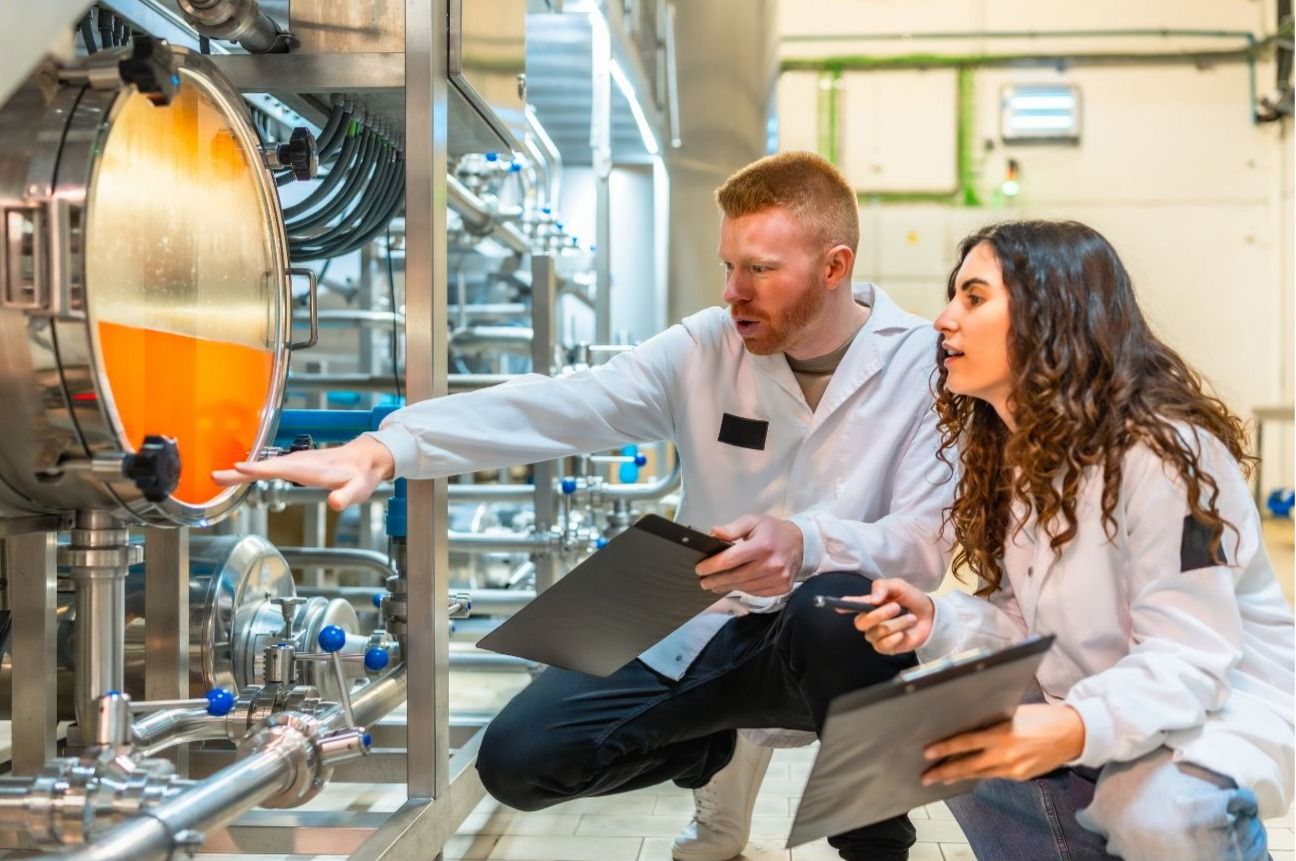
A production site runs patterns that are completely different to your standard 9-5. Shift work is the norm, whether that’s 4-on-4-off, nights, weekends, or early starts. A recruiter who doesn’t understand this will either put candidates forward who aren’t prepared for it, or will struggle to attract the right candidates as they don’t know how to properly sell the role.
Food production roles are physically demanding compared to office-based jobs, and food safety compliance runs through everything - HACCP, BRCGS, allergen control, traceability. A candidate needs to understand these as second nature.
The Cost of Getting it Wrong
The consequences of the wrong senior hire show up quickly on a production site. You can often tell by:
- Line downtime – a person who isn’t equipped for the job can mean a line running short-staffed or not running at all.
- Compliance risk – a hire that doesn’t genuinely understand BRCGS or HACCP is a liability at your next audit.
- Poor retention – rushed hires who don’t understand shift patterns and factory culture will have you seeing them disappear within months, meaning you are back to square one.
- Burn-out cover staff – when a role is open for too long, the gap gets absorbed by existing staff. Although it’s a short-term fix, it can end up creating longer-term retention problems.
What a Specialist Food Operations Recruitment Agency Should Offer
If you’re choosing a speciality food manufacturing recruitment agency for production hiring, you should look for:
- Sector-only focus – rather than having food and drink as one of their many covered sectors, they should have genuine, exclusive specialism in the area.
- Interim cover capability – they need to be able to get someone on site fast when a gap opens unexpectedly.
- Understanding across different areas – from operations and engineering to technical and hygiene specialisms, a good recruitment agency should be genuinely fluent in all of them.
- Fast turnaround – operations doesn’t wait, which is why an agency needs to produce a shortlist ASAP to keep up with your site’s pace.
Permanent, Interim or Both?
Not every hire gap calls for the same answer – sometimes you need a permanent hire from the outset, whereas sometimes you need an interim hire while a proper search runs in parallel, and sometimes you need both.
If a role has become vacant with no immediate pressure behind it, a permanent search can be carried out properly with time to find the right long-term fit. However, when an unexpected resignation happens before an audit, it leaves you struggling for cover – and that’s where interim comes in. It’s not a lesser option, but it gives you a specialist hire that can hit the ground running, and keeps a seat filled when it’s needed while you take time to find the right permanent candidate.
The two options often run side by side so that the gap never becomes a crisis.
How True North Talent supports food operations hiring
At True North Talent, we work exclusively across the specialisms that keep the production site running – operations, engineering, technical, quality, and health, safety and environment – because production hiring never sits in just one lane. Our team understands shift patterns, compliance requirements, and factory culture because it’s the only sector we work in.
When a gap opens up in your organisation with no warning, we know that speed matters. Register a vacancy or browse our operations talent solutions today.
Reach out to us.
Get in touch with us.
Use this form to send us a message, and we'll get back to you shortly.
Latest Insights
Explore our latest market insights on all things food and drink manufacturing.
Why Food Production Businesses Need a Specialist Recruitment Agency (Not a Generalist)
Recruiting for a food production site isn’t the same thing as recruiting for an office, warehouse, or retail team; the hours, compliance requirements, and margin for error are completely differen. For example, a single gap in your rota can stop a line, and the wrong recruitment can have a direct, measurable impact. In this blog, we will cover what actually makes food production recruitment different, and why you need a specialist agency over a generalist.

How Packaging Innovation and Waste Reduction Are Changing Technical Roles
Packaging used to be somebody else's decision. Marketing wanted shelf stand-out, NPD wanted the barrier properties, procurement wanted the price. Technical checked the declarations, signed it off and moved on to the next thing. That's over. Your packaging specification now carries a per-tonne cost; the size of that cost depends on how recyclable the pack is, and the person who has to evidence the classification works in your technical team.

Overcoming Skills Shortages: Integrating Robotics and Quality Control Tech on the Factory Floor
The new robotic palletiser gets signed off in February and runs beautifully until a Sunday night in May, when it throws a fault nobody on site has seen before. Your shift engineer works through the obvious checks. The OEM's helpline opens at nine on Monday. Two lines are backed up until then, and there's a delivery vehicle booked for six in the morning. That's the gap between bringing in automation and being able to run it. It's also the reason a lot of food manufacturers are getting less out of their capital spend than the business case promised.
Why Food Production Businesses Need a Specialist Recruitment Agency (Not a Generalist)
Recruiting for a food production site isn’t the same thing as recruiting for an office, warehouse, or retail team; the hours, compliance requirements, and margin for error are completely differen. For example, a single gap in your rota can stop a line, and the wrong recruitment can have a direct, measurable impact. In this blog, we will cover what actually makes food production recruitment different, and why you need a specialist agency over a generalist.
How Packaging Innovation and Waste Reduction Are Changing Technical Roles
Packaging used to be somebody else's decision. Marketing wanted shelf stand-out, NPD wanted the barrier properties, procurement wanted the price. Technical checked the declarations, signed it off and moved on to the next thing. That's over. Your packaging specification now carries a per-tonne cost; the size of that cost depends on how recyclable the pack is, and the person who has to evidence the classification works in your technical team.
Overcoming Skills Shortages: Integrating Robotics and Quality Control Tech on the Factory Floor
The new robotic palletiser gets signed off in February and runs beautifully until a Sunday night in May, when it throws a fault nobody on site has seen before. Your shift engineer works through the obvious checks. The OEM's helpline opens at nine on Monday. Two lines are backed up until then, and there's a delivery vehicle booked for six in the morning. That's the gap between bringing in automation and being able to run it. It's also the reason a lot of food manufacturers are getting less out of their capital spend than the business case promised.


info@truenorthtalent.co.uk
0161 399 1575
Orega Serviced Offices,
1 Balloon Street,
Manchester,
M4 4BE

Company Registration: 14987603

VAT Number: 449301888
