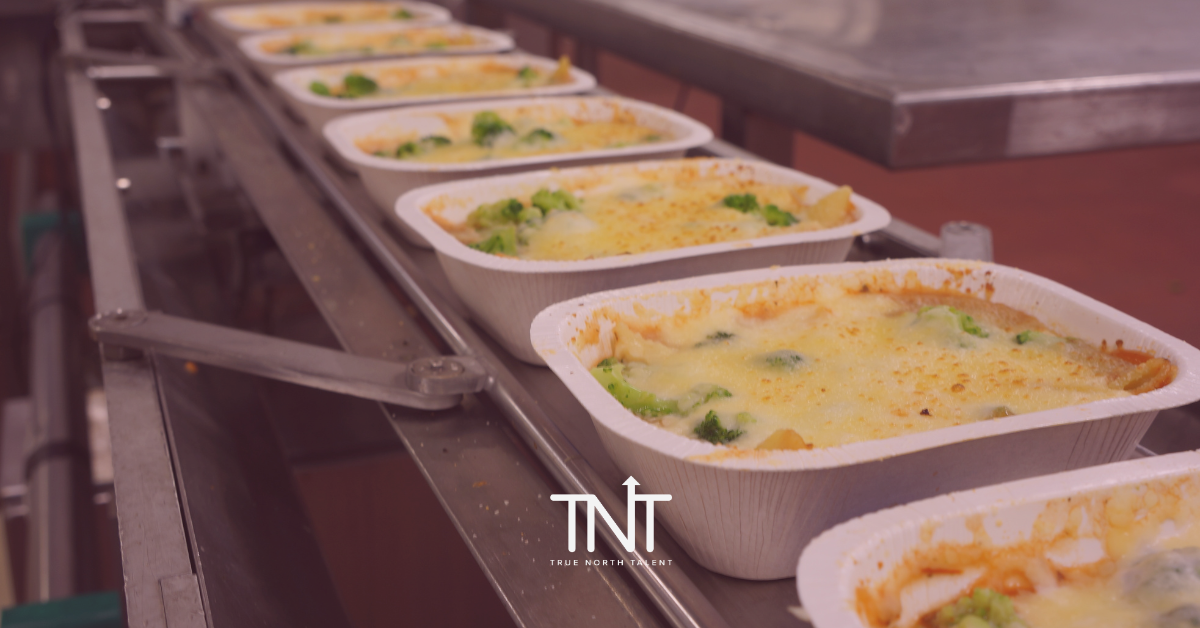
The Top 5 Trends Shaping UK Food & Drink Manufacturing in 2025
The Future of Food: Trends, Tech, and Changing Tastes in 2025
The UK food and drink manufacturing industry is always moving and in 2025, the pace feels faster than ever. With new technology, shifting consumer demands and constant pressure to stay competitive, manufacturers are being asked to do more than just keep up. They need to be forward-thinking, agile and ready to adapt.
At True North Talent, we spend our time speaking to leaders, candidates, and businesses across the industry. That means we’ve got a front-row seat to the changes shaping the sector right now. In a series of articles, we will document some of the big things we’re seeing.
The Top 5 Trends Shaping UK Food & Drink Manufacturing in 2025
So, what’s driving the industry this year? Five key themes keep coming up:
🌍 Sustainability pressures
From cutting carbon emissions to reducing food waste and introducing recyclable or compostable packaging, sustainability has shifted from a “tick box” exercise to a core business strategy. Both retailers and consumers are demanding proof of progress, making sustainability central to long-term competitiveness and reputation.
🔗 Supply chain resilience
The aftershocks of Brexit, COVID-19 and global disruption are still being felt. Businesses are now investing in smarter, more flexible supply chains that prioritise local sourcing, diversified suppliers and improved forecasting to mitigate risk and protect margins.
👩💼 Talent challenges
The fight for skilled people across operations, engineering, technical and leadership roles is as fierce as ever. With labour shortages and an ageing workforce, businesses are increasingly looking at innovative ways to encourage young people into the industry, turning to interim specialists, flexible hiring models and stronger employer branding to attract and retain the right talent.
💷 Cost efficiency
Inflationary pressures and rising raw material prices continue to squeeze margins. Manufacturers are seeking ways to deliver more with less through leaner processes, automation, energy efficiency and sharper procurement strategies, all while maintaining product quality and consistency.
🥗 Innovation in NPD
Consumers expect healthier, more sustainable and exciting food and drink options at speed. Manufacturers are under pressure to innovate quickly and effectively, balancing creativity with compliance, safety and commercial viability in a highly competitive market.
These aren’t just trends on paper; they’re impacting how businesses plan, hire and operate on a daily basis.
✨ Summary
At True North Talent, we understand these challenges because we live and breathe food and drink manufacturing recruitment. Whether you need specialist interims to drive projects forward, permanent hires to strengthen your teams, or senior leaders to shape strategy, we connect you with the right people to help you adapt and thrive in 2025.

Reach out to us.
Get in touch with us.
Use this form to send us a message, and we'll get back to you shortly.

Fiona McDonald
Business Operations Manager
Fiona McDonald is an experienced recruitment professional with a degree in Hospitality Management. With more than 25 years' recruitment industry experience, having worked across temporary and permanent agency recruitment, in-house and executive search, she has supported businesses and senior professionals across Food & Drink Manufacturing recruitment, Engineering, HVAC, Fire & Security, Commercial and Hospitality.
Latest Insights
Explore our latest market insights on all things food and drink manufacturing.

How specialist recruiters reduce downtime across critical site leads and technical roles
Your Engineering Manager resigns on a Friday afternoon. By Monday you've briefed three agencies. By Wednesday you're looking at twenty-two CVs, and eighteen of them have never set foot in a food environment. You've now lost most of a week and you're no closer to filling the role. The line is still running, the planned maintenance schedule is already slipping, and your Operations Manager has picked up a second job on top of their own. This is the point where the difference between a generalist agency and a specialist recruiter stops being a procurement preference and starts costing you output.
The true cost of a bad hire and why Food Manufacturers are struggling to hire middle-management roles
A new Shift Manager starts in March. By June the pattern is clear. Changeovers are taking longer than they used to, the paperwork lands late more often than not, and two of your stronger line leaders have started asking about roles at the site down the road. Nobody has done anything obviously wrong. The operation is just running worse than it was. That's what a bad hire in middle management usually looks like. It rarely announces itself, and it almost never shows up as a single event you can point at. It gets worse over time, and by the time you've named the problem you've lost six months.

When to Hire Permanent vs. Interim in Food Manufacturing
Your Technical Manager hands in their notice on a Monday morning. There's a BRCGS audit eight weeks out, a customer visit before that, and a quality management system only one person on site properly understands. By Monday afternoon, you're already behind. Production has its own version. A shift manager goes off sick with no return date. A supervisor steps up to cover, and three weeks later that supervisor is taking calls from an agency, because the extra responsibility arrived without the extra money. Both situations force the same decision. Do you run a permanent search and live with the gap, bring in an interim, or do both at once?
How specialist recruiters reduce downtime across critical site leads and technical roles
Your Engineering Manager resigns on a Friday afternoon. By Monday you've briefed three agencies. By Wednesday you're looking at twenty-two CVs, and eighteen of them have never set foot in a food environment. You've now lost most of a week and you're no closer to filling the role. The line is still running, the planned maintenance schedule is already slipping, and your Operations Manager has picked up a second job on top of their own. This is the point where the difference between a generalist agency and a specialist recruiter stops being a procurement preference and starts costing you output.
The true cost of a bad hire and why Food Manufacturers are struggling to hire middle-management roles
A new Shift Manager starts in March. By June the pattern is clear. Changeovers are taking longer than they used to, the paperwork lands late more often than not, and two of your stronger line leaders have started asking about roles at the site down the road. Nobody has done anything obviously wrong. The operation is just running worse than it was. That's what a bad hire in middle management usually looks like. It rarely announces itself, and it almost never shows up as a single event you can point at. It gets worse over time, and by the time you've named the problem you've lost six months.
When to Hire Permanent vs. Interim in Food Manufacturing
Your Technical Manager hands in their notice on a Monday morning. There's a BRCGS audit eight weeks out, a customer visit before that, and a quality management system only one person on site properly understands. By Monday afternoon, you're already behind. Production has its own version. A shift manager goes off sick with no return date. A supervisor steps up to cover, and three weeks later that supervisor is taking calls from an agency, because the extra responsibility arrived without the extra money. Both situations force the same decision. Do you run a permanent search and live with the gap, bring in an interim, or do both at once?


info@truenorthtalent.co.uk
0161 399 1575
100 Embankment,
Cathedral Approach,
Manchester,
M3 7FB

Company Registration: 14987603

VAT Number: 449301888
