How to Choose the Right Food Recruitment Agency for Your Food Manufacturing Business
If you search “food recruitment agency” in a search engine, you’ll get hundreds of results, because ‘food’ covers wide ground – hospitality, retail, FMCG distribution and general manufacturing, for example. However, they’re completely different worlds to recruit for, and the wrong fit just wastes time.
In this blog, we will discuss what to actually look for when choosing the right food manufacturing recruitment business.

Generalist vs sector-specialist agencies
On paper, a generic recruiter and a food manufacturing specialist can look the same. Both will send you a shortlist, and both will talk about ‘culture fit’. However, the difference shows up actually on site.
A specialist knows that a 4-on-4-off shift pattern isn’t a red flag – it’s standard practice. They also know the difference between BRCGS (Brand Reputation through Compliance of Global Standards) and HACCP (Hazard Analysis and Critical Control Points) and why a candidate needs to be able to speak both fluently.
They understand seasonality, in that your headcount in the run-up to Christmas will look nothing like February, and that factory culture involves pace and pressure. The fact you have a great CV means nothing if you can’t handle being on the production line at 5am.
A generic recruiter doesn’t quite understand these areas, and they match the job to any CVs with the same keywords, even if it has nothing to do with food. You end up having to do the sector education yourself at the interview stage when it’s already too late.
5 questions to ask a food manufacturing recruitment agency before you sign up
Do you only work in food and drink?
If food recruitment is one of multiple sectors they seem to dabble in, ask how much of their business it actually represents. Specialist should be measurable rather than just a statement on their website.
What's your candidate screening process?
It’s good to know the ins and outs of the screening process that goes beyond checking CVs. Reference checks, right-to-work checks, and sector-specific technical assessments should all be standard in this industry.
Can you show placement retention data?
A good food manufacturing recruitment agency should know and be willing to tell you what proportion of their placements are still in their role after six months. If they can’t answer, that tells you all you need to know.
What's your average time-to-shortlist?
Vacancies don’t stay open gracefully – you need a realistic number from your recruitment agency rather than a vague, ongoing promise.
Do you offer interim as well as permanent?
Not every gap in the food business needs a permanent hire, and not every agency can flex between the two. If there is a last-minute resignation before an important audit, you need an agency that can move fast on interim cover as well as run a proper permanent search.
Red Flags to Watch Out For
When choosing a food manufacturing recruitment agency for your manufacturing business, there are a few warning signs you should know before signing anything:
- High candidate drop-off – if candidates are pulling out mid-process or not turning up to interviews, it tends to mean that the agency hasn’t properly educated them or managed expectations.
- Generic job specs – if the role they’ve written can be applied to hospitality venues as well as food manufacturing sites, they haven’t understood your business.
- No sector terminology – are they using the language of the industry? For example, BRCGS, HACCP, or OEE?
- No reference or right-to-work checks – this is a compliance risk, and any agency not doing this properly shouldn’t be trusted at all with your recruitment.
What True North Talent Does Differently
We’re not your generic recruitment agency. We’re specialists exclusively in the food and drink manufacturing industry, and have over 20 years of sector experience behind us. We understand shift patterns, BRCGS and HACCP, seasonality, and factory culture because it’s the only world we work in.
Whether you need a permanent hire, an interim on-site within hours, or an executive search, we have the solutions tailored to your needs and goals.
Register a vacancy or speak to the team to find out how True North Talent can help.
Reach out to us.
Get in touch with us.
Use this form to send us a message, and we'll get back to you shortly.
Latest Insights
Explore our latest market insights on all things food and drink manufacturing.
Why Food Production Businesses Need a Specialist Recruitment Agency (Not a Generalist)
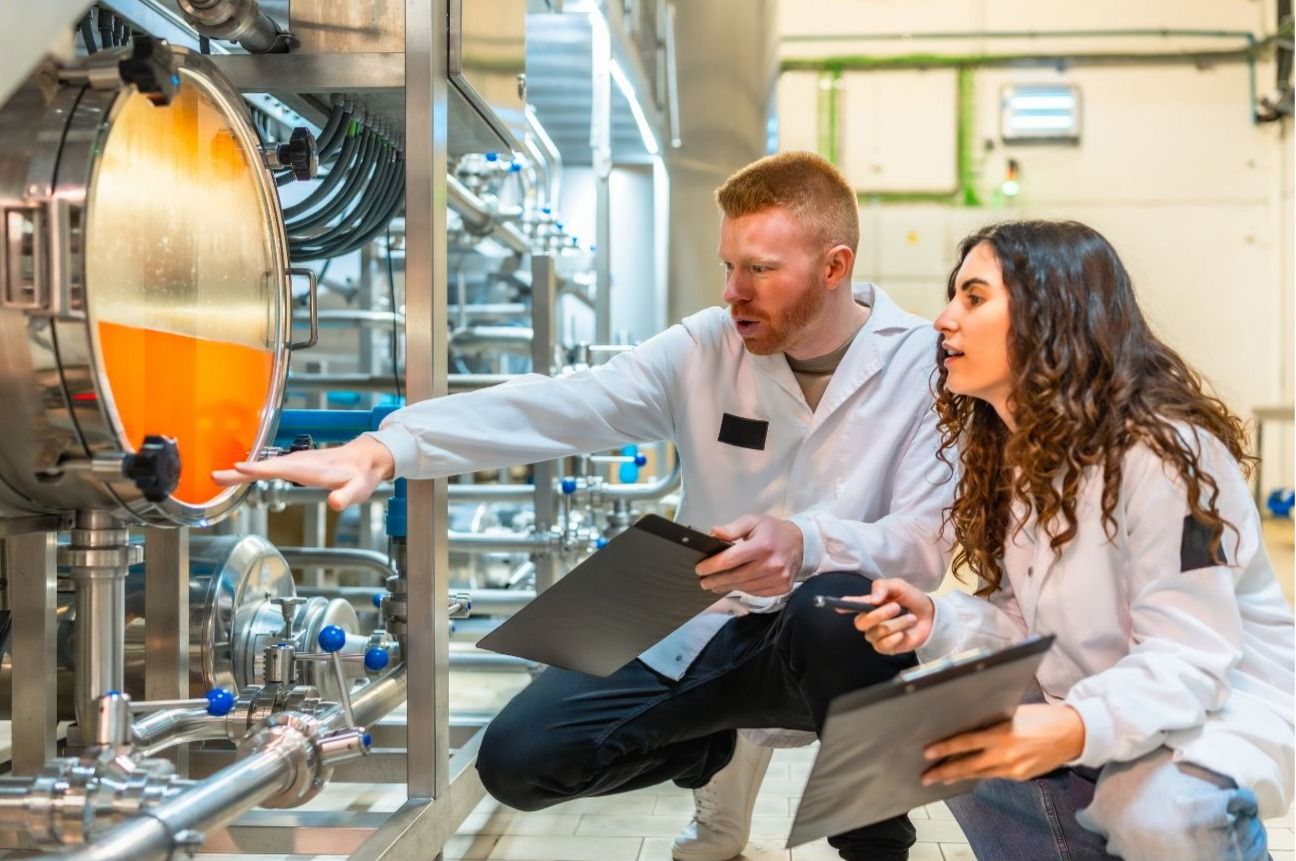
Recruiting for a food production site isn’t the same thing as recruiting for an office, warehouse, or retail team; the hours, compliance requirements, and margin for error are completely differen. For example, a single gap in your rota can stop a line, and the wrong recruitment can have a direct, measurable impact. In this blog, we will cover what actually makes food production recruitment different, and why you need a specialist agency over a generalist.

How Packaging Innovation and Waste Reduction Are Changing Technical Roles
Packaging used to be somebody else's decision. Marketing wanted shelf stand-out, NPD wanted the barrier properties, procurement wanted the price. Technical checked the declarations, signed it off and moved on to the next thing. That's over. Your packaging specification now carries a per-tonne cost; the size of that cost depends on how recyclable the pack is, and the person who has to evidence the classification works in your technical team.

Overcoming Skills Shortages: Integrating Robotics and Quality Control Tech on the Factory Floor
The new robotic palletiser gets signed off in February and runs beautifully until a Sunday night in May, when it throws a fault nobody on site has seen before. Your shift engineer works through the obvious checks. The OEM's helpline opens at nine on Monday. Two lines are backed up until then, and there's a delivery vehicle booked for six in the morning. That's the gap between bringing in automation and being able to run it. It's also the reason a lot of food manufacturers are getting less out of their capital spend than the business case promised.
Why Food Production Businesses Need a Specialist Recruitment Agency (Not a Generalist)
Recruiting for a food production site isn’t the same thing as recruiting for an office, warehouse, or retail team; the hours, compliance requirements, and margin for error are completely differen. For example, a single gap in your rota can stop a line, and the wrong recruitment can have a direct, measurable impact. In this blog, we will cover what actually makes food production recruitment different, and why you need a specialist agency over a generalist.
How Packaging Innovation and Waste Reduction Are Changing Technical Roles
Packaging used to be somebody else's decision. Marketing wanted shelf stand-out, NPD wanted the barrier properties, procurement wanted the price. Technical checked the declarations, signed it off and moved on to the next thing. That's over. Your packaging specification now carries a per-tonne cost; the size of that cost depends on how recyclable the pack is, and the person who has to evidence the classification works in your technical team.
Overcoming Skills Shortages: Integrating Robotics and Quality Control Tech on the Factory Floor
The new robotic palletiser gets signed off in February and runs beautifully until a Sunday night in May, when it throws a fault nobody on site has seen before. Your shift engineer works through the obvious checks. The OEM's helpline opens at nine on Monday. Two lines are backed up until then, and there's a delivery vehicle booked for six in the morning. That's the gap between bringing in automation and being able to run it. It's also the reason a lot of food manufacturers are getting less out of their capital spend than the business case promised.


info@truenorthtalent.co.uk
0161 399 1575
Orega Serviced Offices,
1 Balloon Street,
Manchester,
M4 4BE

Company Registration: 14987603

VAT Number: 449301888
