Speed to Shelf: Streamlining Your NPD Process
How Food Manufacturing Will Shape Up in 2026
The UK food and drink manufacturing industry shows no signs of slowing down in 2026. Last year, we saw numerous leadership changes, industry consolidation and some great investments and innovation. And this year, we suspect the pace of change will be accelerating. With rapid advances in technology, evolving consumer expectations, ongoing supply chain pressures and tighter margins, manufacturers are being challenged to do far more than simply stand still. Success now depends on being agile, forward-thinking and ready to adapt quickly.
At True North Talent, we’re in constant conversation with industry leaders, hiring managers and professionals across the sector. That gives us a real, on-the-ground view of how the landscape is shifting - and what businesses need to stay competitive in the years ahead.
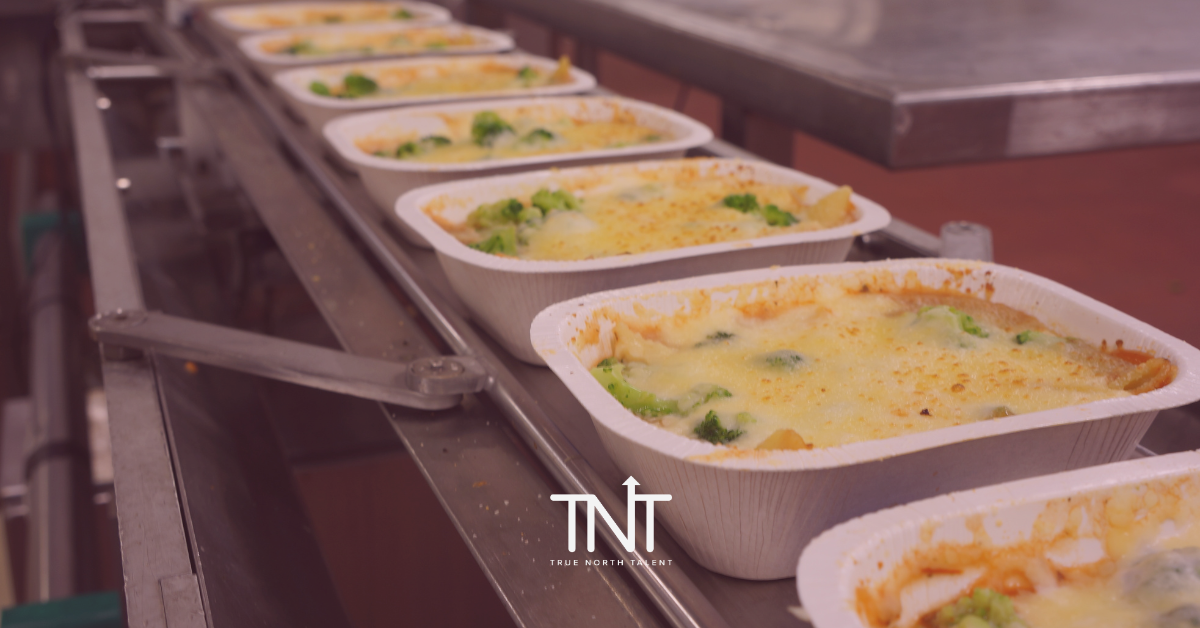
Speed to Shelf: Streamlining Your NPD Process
In today’s food and drink manufacturing market, speed matters. Consumer trends move fast, retailers want innovation yesterday and the brands that win are often the ones that can get great products to market quickly, without compromising on quality or safety.
But speeding up your NPD process doesn’t mean cutting corners. It’s about working smarter, not rushing.
Why speed to shelf is under pressure
Trends like plant-based, high-protein, reduced sugar and functional foods are evolving at pace. Add in retailer pressure, shorter product lifecycles and increasing competition and NPD teams are expected to deliver more innovation in less time.
For many manufacturers, traditional development processes just aren’t built for that level of agility.
Breaking down silos between teams
One of the biggest barriers to speed is poor communication between departments. When NPD, technical, operations, procurement and marketing work in isolation, delays are inevitable.
The most effective businesses bring these teams together early in the process. Cross-functional collaboration helps identify potential challenges sooner (whether it’s ingredient availability, line capability or compliance), reducing last-minute changes that slow everything down.
Using data and insight to make faster decisions
Data plays a huge role in streamlining NPD. Clear consumer insight, accurate cost modelling and robust trial data allow teams to make confident decisions quickly.
Having access to the right information at the right time reduces indecision and keeps projects moving forward without unnecessary back-and-forth.
Designing for manufacturability
A great product idea isn’t enough if it can’t be produced efficiently at scale. Building manufacturability into the NPD process from day one helps avoid costly rework and launch delays.
This means close collaboration between development chefs, process technologists and engineering teams, ensuring products are designed with real production constraints in mind.
The people factor in fast NPD
Ultimately, speed to shelf comes down to people. Agile NPD requires experienced professionals who can balance creativity with commercial reality, understand risk and keep projects moving under pressure.
As product pipelines grow, many manufacturers turn to interim NPD, technical or project specialists to add capacity and expertise without slowing momentum.
How True North Talent supports faster NPD
At True North Talent, we work with food and drink manufacturers to support innovation at pace. Whether you need permanent NPD leaders or interim specialists to accelerate development during peak periods, we help you build teams that can deliver speed to shelf without compromising standards.
👉 Because in today’s market, the faster you can innovate, the better placed you are to win.

Reach out to us.
Get in touch with us.
Use this form to send us a message, and we'll get back to you shortly.

Amy Griffith
Managing Director
Amy Griffith is Managing Director of True North Talent and a leading specialist in Food and Drink Manufacturing recruitment, with 8 years’ experience in permanent and interim hiring, executive search and talent strategy, supporting organisations and senior leaders across the UK food, drink and manufacturing sectors.
Latest Insights
Explore our latest market insights on all things food and drink manufacturing.

How specialist recruiters reduce downtime across critical site leads and technical roles
Your Engineering Manager resigns on a Friday afternoon. By Monday you've briefed three agencies. By Wednesday you're looking at twenty-two CVs, and eighteen of them have never set foot in a food environment. You've now lost most of a week and you're no closer to filling the role. The line is still running, the planned maintenance schedule is already slipping, and your Operations Manager has picked up a second job on top of their own. This is the point where the difference between a generalist agency and a specialist recruiter stops being a procurement preference and starts costing you output.
The true cost of a bad hire and why Food Manufacturers are struggling to hire middle-management roles
A new Shift Manager starts in March. By June the pattern is clear. Changeovers are taking longer than they used to, the paperwork lands late more often than not, and two of your stronger line leaders have started asking about roles at the site down the road. Nobody has done anything obviously wrong. The operation is just running worse than it was. That's what a bad hire in middle management usually looks like. It rarely announces itself, and it almost never shows up as a single event you can point at. It gets worse over time, and by the time you've named the problem you've lost six months.

When to Hire Permanent vs. Interim in Food Manufacturing
Your Technical Manager hands in their notice on a Monday morning. There's a BRCGS audit eight weeks out, a customer visit before that, and a quality management system only one person on site properly understands. By Monday afternoon, you're already behind. Production has its own version. A shift manager goes off sick with no return date. A supervisor steps up to cover, and three weeks later that supervisor is taking calls from an agency, because the extra responsibility arrived without the extra money. Both situations force the same decision. Do you run a permanent search and live with the gap, bring in an interim, or do both at once?
How specialist recruiters reduce downtime across critical site leads and technical roles
Your Engineering Manager resigns on a Friday afternoon. By Monday you've briefed three agencies. By Wednesday you're looking at twenty-two CVs, and eighteen of them have never set foot in a food environment. You've now lost most of a week and you're no closer to filling the role. The line is still running, the planned maintenance schedule is already slipping, and your Operations Manager has picked up a second job on top of their own. This is the point where the difference between a generalist agency and a specialist recruiter stops being a procurement preference and starts costing you output.
The true cost of a bad hire and why Food Manufacturers are struggling to hire middle-management roles
A new Shift Manager starts in March. By June the pattern is clear. Changeovers are taking longer than they used to, the paperwork lands late more often than not, and two of your stronger line leaders have started asking about roles at the site down the road. Nobody has done anything obviously wrong. The operation is just running worse than it was. That's what a bad hire in middle management usually looks like. It rarely announces itself, and it almost never shows up as a single event you can point at. It gets worse over time, and by the time you've named the problem you've lost six months.
When to Hire Permanent vs. Interim in Food Manufacturing
Your Technical Manager hands in their notice on a Monday morning. There's a BRCGS audit eight weeks out, a customer visit before that, and a quality management system only one person on site properly understands. By Monday afternoon, you're already behind. Production has its own version. A shift manager goes off sick with no return date. A supervisor steps up to cover, and three weeks later that supervisor is taking calls from an agency, because the extra responsibility arrived without the extra money. Both situations force the same decision. Do you run a permanent search and live with the gap, bring in an interim, or do both at once?


info@truenorthtalent.co.uk
0161 399 1575
Orega Serviced Offices,
1 Balloon Street,
Manchester,
M4 4BE

Company Registration: 14987603

VAT Number: 449301888
